


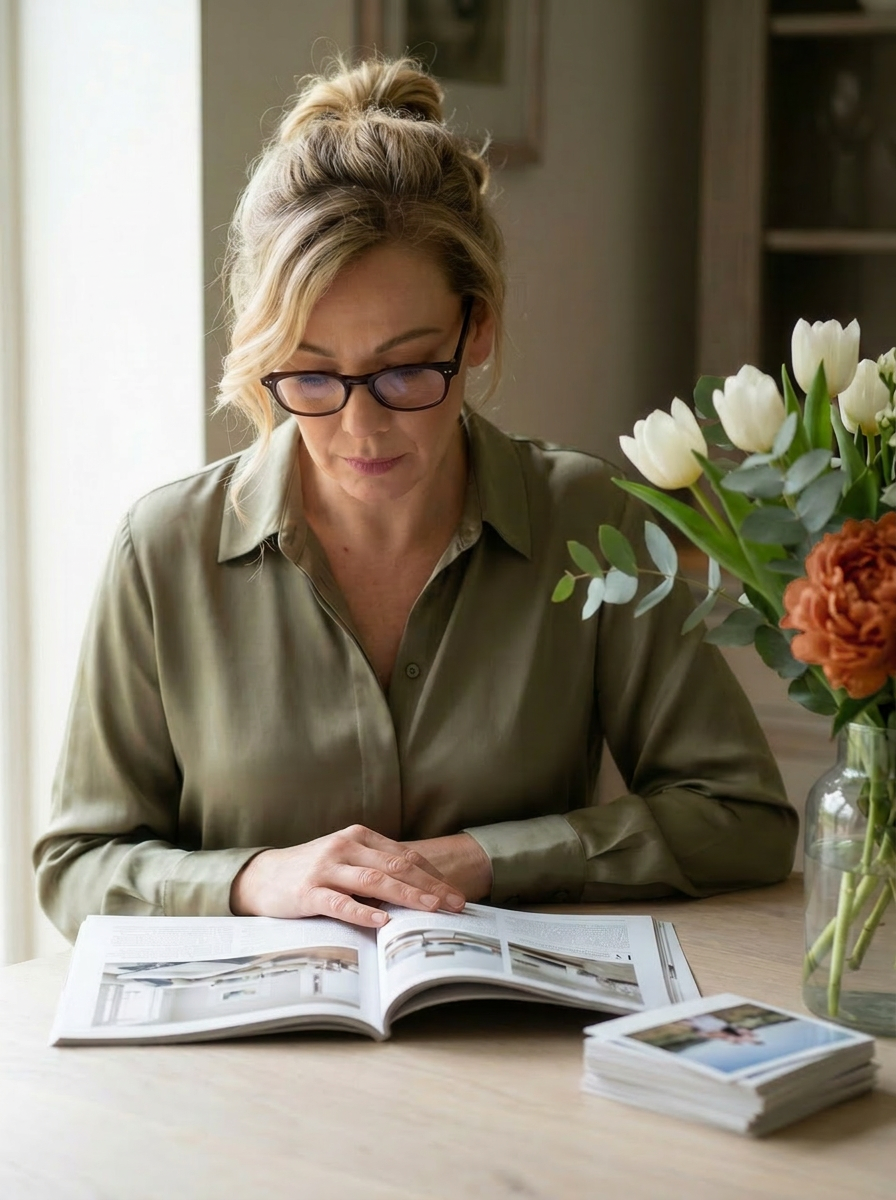
“If your home no longer reflects who you are, the feeling can be difficult to explain—but impossible to ignore.”
There’s a moment most women don’t expect.
Nothing is wrong with the house.
The furniture is good. The layout works. You’ve invested time and money into making it feel right.
And yet—something feels off.
Not dramatically. Quietly.
You walk into a room and hesitate.
You scroll for inspiration, but nothing quite fits.
You buy things, but the feeling doesn’t resolve.
This isn’t a design problem.
It’s a misalignment.
I see this most often when a woman is in transition—personally, professionally, or emotionally—and her space hasn’t caught up with who she is becoming.
Below are five signs I look for immediately.
1. You feel disconnected from your own space
You can appreciate your home, but you don’t feel held by it.
There’s no emotional resonance—no sense of this is me now.
Often, this happens when your life has evolved, but your environment still reflects a previous version of you.
2. You keep searching for inspiration—but nothing lands
You save images. You explore ideas. You try to define your style.
But everything feels slightly wrong.
This isn’t because you lack taste.
It’s because you’re trying to find an answer externally rather than defining it internally.
3. Your home looks “complete” but doesn’t feel resolved
From the outside, everything appears finished.
But you know it isn’t.
There’s a subtle lack of cohesion—spaces that work individually, but don’t tell a clear story together.
This is what I call competence without coherence.
4. You hesitate before making decisions
Even simple choices feel weighted.
You second-guess. You delay. You revisit decisions you thought were done.
This isn’t indecision—it’s a lack of clear guardrails.
Without a defined direction, every choice feels like a risk.
5. You spend—but the feeling doesn’t change
You invest in furniture, décor, and updates.
But the result never quite matches the expectation.
The issue isn’t what you’re buying.
It’s that the underlying framework hasn’t been clarified.
What this actually means
Most women assume:
“I’m just not good at design.”
What I see is different.
This isn’t about taste.
It’s about not having the right level of support and structure around your decisions.
When your identity evolves, your environment needs to be reinterpreted—not refreshed.
This is why surface-level changes rarely work.
They don’t address the root issue: alignment.
What happens when you ignore it
The feeling doesn’t go away. It settles in.
You find yourself living with a quiet dissatisfaction you can’t quite name.
You spend more, hoping the next purchase will resolve it—but it rarely does.
Decisions begin to feel heavier, and that hesitation starts to spill into other areas of your life.
And over time, your home holds a version of you that no longer fits.
“When your home no longer reflects who you are, even simple decisions start to feel heavier.”
What aligned spaces actually do
Something shifts when a space finally reflects who you are becoming.
Decisions stop feeling complicated—they become obvious.
The room feels calm—not because it’s minimal, but because it’s coherent.
You move through your home differently—more settled, more certain, more yourself.
If you’re curious what it actually feels like when a space finally clicks into place:
→ [Read: When Your Home Finally Reflects Who You Are Becoming]
There’s a growing body of research showing that our environment directly shapes how we feel and function. Elements such as light, layout, and visual coherence influence stress levels, mood, and even decision-making. When a space feels unresolved or overstimulating, your nervous system continues to register that friction—often without conscious awareness. You can explore one example of this research in the American Psychological Association’s article Design in Mind. Link HERE
Where to start
If you recognise yourself in these signs, the next step isn’t to redecorate.
It’s to understand why your space feels the way it does—so you can move forward with clarity rather than guesswork.
I created a simple starting point for this:
→ Download: The 5 Signs Guide + Sensory Walkthrough
It’s designed to give you a “sense of clarity” within minutes—so you can finally see what’s been missing, and where to begin.
Common questions I’m often asked
Why does my home suddenly feel wrong?
Because your identity has shifted. Your environment still reflects a previous version of you, creating subtle emotional friction over time.
Do I need to redecorate everything?
No. Most of the time, the issue is not the entire space—it’s a lack of clear direction. Strategic changes are far more effective than starting over.
Why do I keep making the wrong design choices?
You’re not making “wrong” choices—you’re making decisions without a defined framework. Once you have guardrails, decisions become significantly easier.
About Julia
I help thoughtful, quality-conscious women in transition create calm, timeless homes that reflect who they are becoming—using a clear, investment-grade design framework.
My work focuses on turning overwhelm into confident, well-considered decisions, so your space feels grounded, elevated, and deeply supportive.


leave a comment